
Computer
Vision
Smart cameras, thermal imagers and LiDAR with AI analysis: quality control, construction inspection, production and safety monitoring.
- real-time monitoring
- 24/7
- production errors
- −60%
- inspection costs
- −50%
- fewer safety violations
- 3x
Industries
The logic is the same everywhere: a person cannot watch dozens of video streams 24/7, but a neural network can.
-
 01
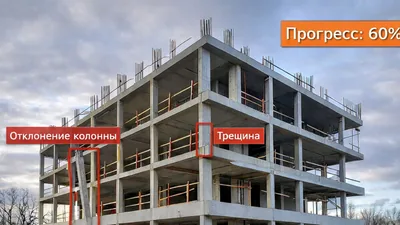
01 Construction
- Quality control of construction works
- 3D scanning and BIM model comparison
- Construction progress monitoring
- Detection of design deviations
-
 02
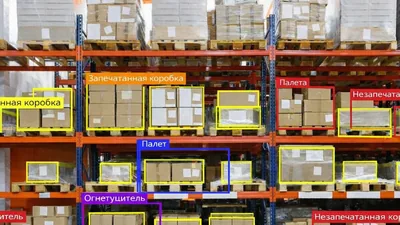
02 Manufacturing & Industry
- Defect detection on the production line
- Safety compliance monitoring
- Equipment load monitoring
- Identification and movement tracking
-
 03
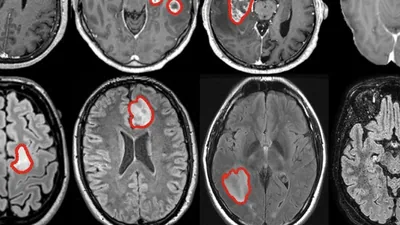
03 Medicine
- Analysis of medical images (CT, MRI, X-ray)
- Early pathology detection
- Compliance control in operating rooms
- Patient condition monitoring
-
 04
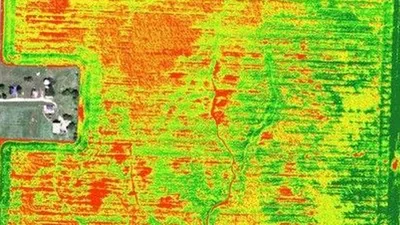
04 Agro-complexes
- Crop condition monitoring
- Disease and pest detection
- Animal health and behaviour monitoring
- Harvest sorting automation
-
 05
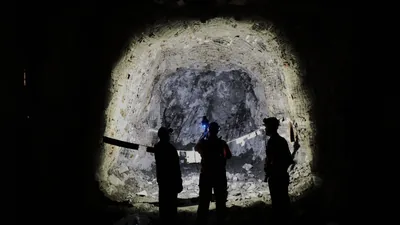
05 Mining & Metallurgy
- Safety monitoring in mines and quarries
- Ore and rolled metal quality control
- Safety violation detection (helmets, vests, access zones)
- Mining equipment condition monitoring

Technologies
We build and fine-tune sensors and models for every project
- 01
LiDAR
Laser scanners for accurate 3D mapping. Work in complete darkness.
- 02
Thermal imaging
Infrared cameras for detecting heat anomalies: leaks, insulation failures, overheating.
- 03
360° cameras
Full-sphere video capture. One device covers an entire room.
- 04
IoT sensors
Humidity, temperature, pressure and gas sensors.
- 05
BIM integration
Scan data overlaid onto design models automatically with high precision.
- 06
VLM development
Fine-tuning vision-language models on your data for higher accuracy.
How we implement
-
Audit
We study the site or line, the cameras already installed and the data. We pick one measurable task and record the "before" figure.
-
Data and fine-tuning
We capture real conditions: different shifts and lighting, good samples and defects. We fine-tune the model for your product and your violations.
-
Pilot
The system runs in parallel with people, and each of its decisions is checked by hand. This shows where the algorithm errs and where it notices more than a human.
-
Scaling
We roll it out to the whole line or new sites and connect notifications, dashboards and integration with 1C, BIM and ERP.
We start with one post and one type of defect, make sure the algorithm holds its accuracy, and only then scale.
-
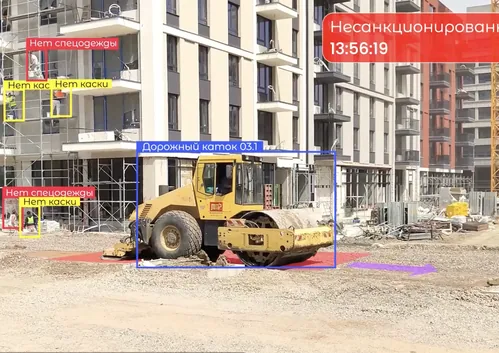
construction
Quality control on a construction site
- 160M RUB financing savings
- −70% inspection time
- 1 minute to analyse a room
client: NDA
-
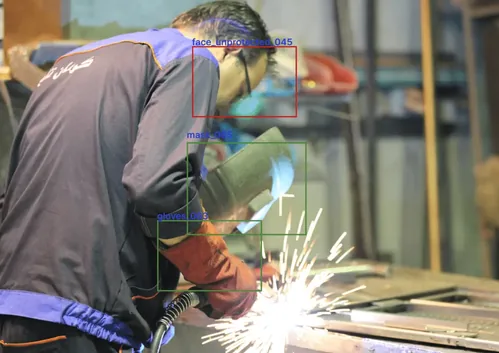
manufacturing · article in Russian
Compressor manufacturing in Kazakhstan
- −60% quality errors
- −50% inspection costs
- 3x fewer safety violations
client: Adekom.kz

pricing
from 150,000 RUB / mo
- Equipment setup
- Custom VLM model fine-tuning
- Integration with 1C, BIM, ERP systems
- Scaling to new facilities

Our
strengths
-
Technology expertise
A team of graduates from top technical universities and specialists from Tinkoff, Sber and leading fintech companies.
Mathematical foundation is the basis for every decision we make.
 Team
Team
TANTAL.AI -
Guaranteed results
Deployed Computer Vision at a compressor manufacturing facility in Kazakhstan.
Quality control errors reduced by 60%, safety violations dropped by 3x.
 CEO
CEO
Adekom.kz
Further reading
Implementation breakdowns in our blog
- 01
Computer vision on a construction site: how a developer saved 160 million RUB
Checking a room against BIM in a minute, construction progress for the bank and 24/7 safety control.
blog · case · in Russian
- 02
No violations: how Adekom put computer vision on the conveyor
Defect detection faster than 200 ms per part, PPE control in the workshop and analytics of the causes of defects.
blog · case · in Russian
- 03
Computer vision in manufacturing: how video analytics controls PPE
Helmet and goggle control in the workshop, payback periods of operational tasks and a pilot plan.
blog · in Russian
F&Q
Frequently asked questions about computer vision
What is computer vision?
It is the ability of a machine to look at an image and understand what is in it: recognise objects, compare them with a reference, notice anomalies. Technically it is three layers: a sensor (camera, LiDAR or thermal imager), a model trained on your data, and a VLM, a vision-language model that turns the picture into a text report.
Ordinary video surveillance records an archive. Computer vision reacts in real time and gives numbers: where the deviation is, how big, who broke the rule.
Do we need to replace the cameras?
In most cases no: the system works with the stream from your existing IP cameras. Replacement is needed only if the angle or resolution at the control point does not let you tell the object apart. Then it is cheaper to reposition or add one camera than to replace the whole fleet.
How much does implementation cost?
From 150,000 RUB per month, with setup and integration. The real figure depends on the area and the scenario: from simple safety monitoring to a full BIM comparison with weekly 3D scanning. We calculate the payback before the start, with no obligations.
How long does a pilot last?
Usually 4-8 weeks on one site: audit, model fine-tuning, notification setup and a test period. We plan scaling to the whole enterprise from the pilot results. At the Adekom plant the pilot accuracy was 98.4%, with fewer than one percent of false alarms.
Where is the data processed?
Where speed matters, on edge servers next to the line, not in the cloud. On the Adekom conveyor the verdict on a part is needed within 200 ms including data transfer, and the connection to the plant must not become a single point of failure for quality control.
What about employee privacy?
A PPE control system recognises the presence of protective equipment, not the identity of the worker. Face recognition and biometrics are a separate task with separate requirements under Russian Federal Law 152-FZ, and they are usually not needed in occupational safety projects.
Does the system work at night and outdoors?
Yes, but it is a question of choosing cameras and the training set: outdoor areas, night shifts and dusty workshops must be filmed in exactly these conditions when we train the model. We build this into the audit before the pilot starts. LiDAR works even in complete darkness.
